






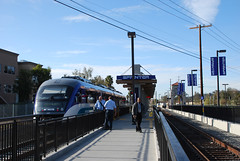
 The diesel light rail in Oceanside, CA is a dramatically different type of train than DC Streetcars. |
In the ongoing debate about streetcar wires, some people have suggested that DDOT abandon electric systems altogether and use diesel. After all, if New Jersey can run a diesel light rail operation, why can’t we?
Valid question, but there’s an equally valid answer: Diesel trains are slow to start and stop. Very slow. Anyone who’s ever ridden VRE or MARC’s Brunswick line can attest. They are good for long-distance trains that stop infrequently, but less ideal for any system with frequent stations. The acceleration and deceleration times slow down the trip too much for all riders, and mean trains can’t keep up with car traffic moving along city streets. Remember that trains are a lot heavier than buses; it takes more gas to move them.
New Jersey’s RiverLine diesel light rail is 34 miles long, with 20 stations. That averages to more than a mile and a half between stops. California’s Sprinter diesel light rail is about the same, with 15 stops in 22 miles. Both those routes serve inter-city travel; they are hybrid systems with as much in common to commuter rail as traditional light rail. DC’s streetcar lines are an entirely different animal. Our 8 lines will average less than 5 miles long each, and they’ll have multiple stops per mile. Diesel just isn’t a viable option, unless all others fail.
So yes, there are some trains in the country that use diesel successfully, but these trains are dramatically different from what DC is building, and if you want your trip along H Street to take less than an hour, DDOT needs an electric solution.
April 12th, 2010 | Permalink
Tags: commuterrail, lightrail, streetcar, transportation



